Determining whether forklift parts need replacement based on their replacement cycle involves a comprehensive assessment based on three dimensions: "time/working hours," "actual working conditions," and "performance." Simply relying on fixed cycles may lead to over-maintenance or neglect of inspection. The scientific approach is as follows:
Use the manufacturer's recommended replacement cycle as a benchmark (preventative replacement) Most wear parts have clearly defined replacement cycles, which can serve as the starting point for maintenance plans:
Engine oil and filters: Replace every 240–1000 hours or 3 months. If the working environment is dusty, the cycle should be shortened.
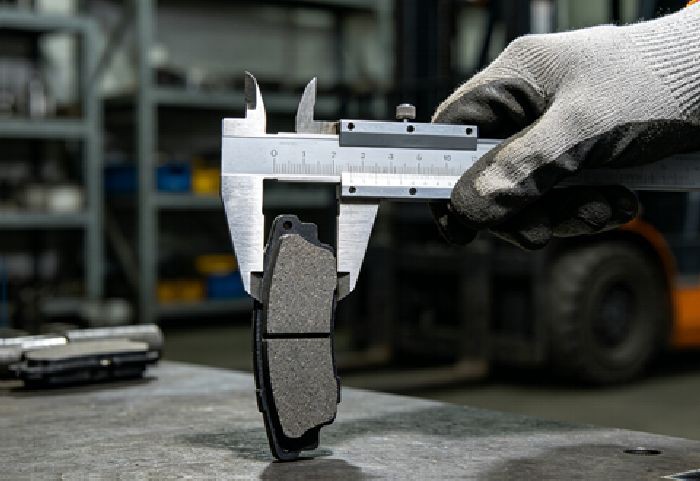
Brake pads: It is recommended to check every 3000–6000 hours. If the thickness is less than 6 mm, replacement is mandatory.
Timing belt: Rubber parts are prone to aging. Replacement is recommended every 6000–9000 hours. Early replacement can avoid the risk of engine failure.
Batteries: Lead-acid batteries generally need to be inspected every 2 years. Replacement should be considered when the capacity drops below 80% of the rated value.
Dynamic Adjustment Based on Actual Usage Environment (Operating Condition Compensation)
Even if the cycle hasn't been reached, harsh environments will accelerate wear and tear, requiring earlier replacement:
High Temperature/High Humidity or Corrosive Environments: Metal parts are prone to rust, and electrical connectors are prone to loosening. It is recommended to shorten the maintenance cycle by 20%–30%.
High Dust Levels and Frequent Heavy Loads: Air filters, hydraulic oil, and tires wear faster, requiring increased inspection frequency.
High-Intensity Operations (Daily Work Exceeding 8 Hours): Wear on critical components such as the engine, transmission, and drive axle accelerates, requiring earlier maintenance intervention.
Judgment Based on Performance and Test Data (Condition Replacement)
When the following signs appear, regardless of whether the service cycle has expired, immediate inspection or replacement is necessary:
Power System Abnormalities:
Difficulty starting, reduced power → Possibly due to wear on spark plugs, fuel filter, or internal engine components.
Straining during gear shifting, abnormal noises → Damaged gearbox gears or synchronizers; replacement of relevant parts is required.
Hydraulic System Failures:
Slow mast lifting, automatic sinking → Aging of the lifting cylinder seals; replacement is recommended if repair costs are high.
Heavy steering → Faulty steering cylinder or hydraulic pump; professional inspection is required.
Brake System Issues:
Brake pedal too low, increased braking distance → Worn brake pads or water in the brake fluid; immediate attention is required.
Appearance and Inspection Abnormalities:
Cracks, deformation, severe corrosion of parts → Such as bent forks or cracked frame; replacement is necessary for safety.
If the data obtained from testing with a multimeter, flaw detector, or other equipment exceeds the standard range and cannot be repaired, the part must be replaced.