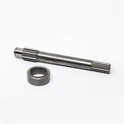
The core technologies of precision machining of components encompass high-precision cutting, grinding, special machining, and intelligent control, achieving machining accuracy down to the micrometer or even nanometer level.
Precision machining of components relies on a series of advanced processes and technologies to ensure extremely high requirements for dimensional accuracy, geometrical accuracy, and surface quality. Depending on the machining target, the main technical paths are as follows:
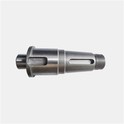
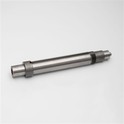
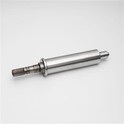
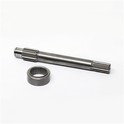
Precision Cutting Technology: Includes precision turning, precision milling, and precision boring, using high-precision CNC machine tools and single-crystal diamond tools for micro-cutting in a constant-temperature environment. Suitable for machining complex structural parts such as shafts, gears, and housings, with typical accuracy reaching IT5~IT7 level and surface roughness Ra 0.1~0.4μm.

Precision Grinding and Lapping:
Grinding: Employing ultra-precision grinding machines and dressed grinding wheels for micro-grinding, the amount of material removed can be controlled at the sub-micrometer level. Used for key components such as bearings, guide rails, and molds, achieving accuracy below 0.1μm.
Honing and Grinding: Used for finishing hole-type parts, creating a cross-hatched surface to improve wear resistance and sealing. Surface roughness after honing can be as low as Ra 0.025μm.
Specialty Machining Technologies: For hard and brittle materials or complex microstructures, non-traditional machining methods are employed:
Electrical Discharge Machining (EDM): Removes material through electrical discharge, suitable for machining cemented carbides, deep holes, and complex cavities, achieving sub-micron precision. Widely used in aerospace and medical devices.
Laser Machining: Achieves micron-level cutting and drilling, such as high-precision cutting of 0.8mm magnets, increasing material utilization by 30%.
Ultrasonic Machining: Combines ultrasonic vibration and abrasives, suitable for low-damage machining of brittle materials such as ceramics and glass.
Composite and Intelligent Machining Technologies
Mill-Turn Machining: Integrates multiple processes into one machine, reducing clamping errors and improving efficiency and consistency. Its application rate is projected to reach 62% by 2025.
AI Intelligent Monitoring: Equipped with vibration, temperature, and displacement sensors, combined with AI algorithms, it achieves fault prediction and dynamic compensation, ensuring machining stability. For example, Haozhi Electromechanical spindles have achieved a historical zero failure rate.
Environment and Quality Control: Ultra-precision machining has extremely high environmental requirements, needing to be carried out in a constant temperature, constant humidity, and dust-free workshop to prevent particulate contamination. Simultaneously, a closed-loop quality system is adopted, combined with digital technologies such as eTALON calibration, to achieve integrated control of "machining-inspection-feedback-compensation".