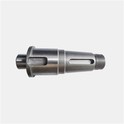
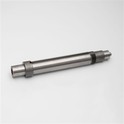
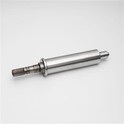
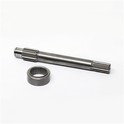
Lubrication management of precision machining components is a core aspect of ensuring high precision, long lifespan, and stable operation of equipment. The key lies in accurate oil selection, on-demand oil supply, and dynamic monitoring to avoid the accumulation of micron-level errors or sudden shutdowns caused by improper lubrication.
Lubricant Selection: Matching Operating Conditions is a Prerequisite Different components have significantly different lubrication performance requirements. The following principles should be followed when selecting lubricants:
Spindle Bearings: Use low-viscosity synthetic oils (such as PAO or ester oils) at high speeds (≥10,000 r/min) to ensure a uniform oil film and good heat dissipation. Do not use greases containing solid additives to prevent nozzle clogging or contamination of precision surfaces.
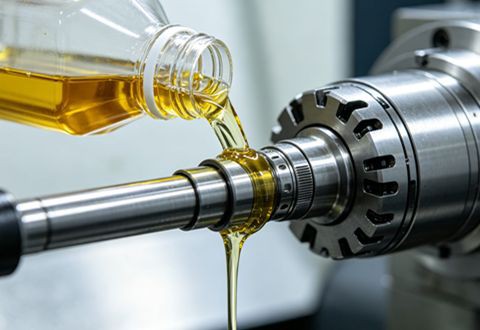
Guideways and Leadscrews: Prone to "creeping" phenomena, use dedicated guideway oils containing anti-creep agents. Viscosity grades are typically 32–150#, balancing lubricity and flowability.
High-performance products such as the Spanish Eagle BESLUX LUDER series are recommended to effectively reduce friction fluctuations.
Gearboxes: For circulating lubrication systems, use industrial gear oils with strong antioxidant and deemulsifying properties to prevent contamination by coolant. Add anti-wear agents for high impact loads, but avoid extreme pressure (EP) oils to prevent corrosion of copper alloy components.
Special Environment Components:
Ultra-vacuum environments (e.g., semiconductor equipment): Use MoS₂ coatings or perfluoropolyether oils to prevent evaporative contamination.
High-temperature zones (>250℃): Use PbO or CaF₂ solid lubricants, which can withstand 700–1000℃.
Cleanrooms: Select low-volatility, non-particulate synthetic lubricants to avoid affecting cleanliness.