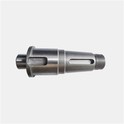
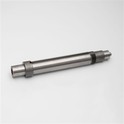
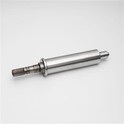
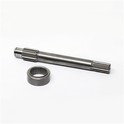
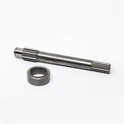
Materials suitable for precision machining mainly include stainless steel (such as SUS303), free-cutting steel (such as 12L15, 10S20), aluminum alloys (such as 6061, 7075), copper alloys (such as H59, C31000 leaded brass), and titanium alloys. These materials are widely used in the manufacture of high-precision parts due to their good machinability, dimensional stability, and high strength.
Common precision machining materials and their characteristics:
Stainless steel (such as SUS303): Corrosion-resistant and wear-resistant, commonly used in medical devices and food machinery parts. However, it is prone to sticking to the cutting tool during machining, requiring the use of specialized coolant and cutting tools.
Free-cutting steel (such as 12L15, 10S20): Contains sulfur to improve chip breaking performance, resulting in high machining efficiency and good surface finish, suitable for mass production of non-standard fasteners and connectors.
Aluminum Alloys (6061, 7075)
6061: Lightweight, good thermal conductivity, and smooth machining; commonly used in aerospace and electronic housings.
7075: Strength close to steel; suitable for high-load components, but more expensive and prone to cracking; requires low-speed machining.
Copper Alloys (H59 Brass, C31000 Lead Brass)
H59: Excellent machinability; used in manufacturing precision gears and valves.
C31000: Lead content improves lubricity; relative machinability reaches 75%, suitable for micron-level electronic connector machining.
Titanium Alloys (e.g., TC4): High strength, low specific gravity, and corrosion resistance; widely used in aerospace and medical implants. However, poor thermal conductivity; requires high-pressure cooling during machining to prevent localized overheating and deformation.
Engineering Plastics (such as PTFE, PEEK)
PTFE: Resistant to acids and alkalis, used in chemical sealing components, but has poor dimensional stability and requires processing compensation.
PEEK: High temperature resistance (260℃) and high strength, becoming a new choice for precision parts in new energy vehicles, but with high processing costs.