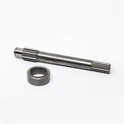
Automotive parts are numerous and varied, typically categorized by function into core types such as engine, transmission, suspension, braking, steering, electrical, and body. Below is a classification of common parts in the main systems:
Engine System: As the "heart" of the car, it mainly includes cylinders, pistons, crankshaft, connecting rods, camshaft, spark plugs, and turbocharger, responsible for converting fuel into power.
Transmission System: Transmits power from the engine to the wheels, including the clutch, gearbox, driveshaft, differential, and half-shafts.
Suspension System: Ensures driving stability and comfort, composed of shock absorbers, springs, stabilizer bars, suspension arms, and ball joints.
Braking System: Controls deceleration and stopping; key components include brake pads, brake discs, brake calipers, brake fluid, and ABS pump.
Steering System: Enables directional control, including the steering wheel, steering column, steering gear, and steering tie rods.
Electrical System: Provides electrical power, including batteries, generators, ignition coils, spark plugs, fuses, relays, lighting, and audio equipment.
Body System: Constitutes the passenger space, including doors, windows, seats, seat belts, sunroof, and interior/exterior trim.
Fuel and Exhaust System: Includes fuel tank, fuel pump, fuel injectors, air filter, catalytic converter, and exhaust pipe.
Cooling and Lubrication System: The cooling system includes the water tank, water pump, radiator, and coolant; the lubrication system includes the oil pump and oil filter.
Tires and Wheels: In direct contact with the road surface, affecting handling and safety, including tires, wheels, and tire pressure monitoring systems.