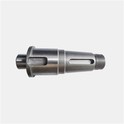
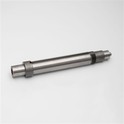
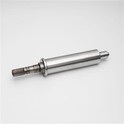
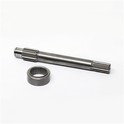
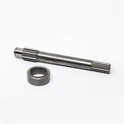
The manufacturing processes of automotive parts mainly include core technologies such as casting, forging, stamping, welding, machining, injection molding, extrusion, and surface treatment. Different processes are suitable for manufacturing different types of parts to meet the requirements of strength, precision, cost, and functionality.
1. Casting Process: Used to manufacture parts with complex shapes and intricate internal structures, such as engine blocks and transmission housings. Molten metal is poured into a mold and cooled to form the shape. Die casting technology (such as aluminum and magnesium alloy die casting) is widely used in automotive lightweighting due to its high efficiency and good surface quality.
2. Forging Process: Improves the strength and toughness of metal parts, suitable for components that bear high loads, such as crankshafts, connecting rods, and drive shafts. Pressure is applied to the metal blank at high or cold temperatures, causing plastic deformation and obtaining a dense microstructure.
3. Stamping Process: Mainly used for the mass production of body panels (such as doors, hoods, and fenders).
4. Welding Process: Utilizing large presses and high-precision molds, metal sheets are processed at room temperature through drawing, trimming, and flanging, offering high efficiency and consistency. Welding is used to join stamped parts into a body-in-white. Common techniques include resistance spot welding and laser welding. Modern factories widely employ robotic automated welding to ensure weld precision and body structural strength.
5. Machining: Precision machining of cast or forged parts, such as turning, milling, drilling, and grinding, ensures dimensional accuracy and surface finish. Typical applications include machining critical components like engine cylinder heads, pistons, and gears.
6. Injection Molding Process: Used to manufacture interior trim and non-load-bearing plastic parts, such as dashboards, door panels, and air vents. Heating plastic granules and injecting them into a mold allows for cooling and shaping, suitable for complex shapes and mass production.