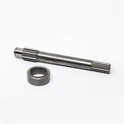
Judging the quality of auto parts requires a comprehensive evaluation from multiple dimensions, including packaging and labeling, appearance and workmanship, material quality, surface treatment, and performance parameters. Oversights in any of these aspects can affect driving safety and lifespan. Here are specific identification methods:
Check if the packaging and labeling are standardized and complete. Genuine parts have meticulous packaging and complete information:
The packaging clearly indicates the brand, model, applicable vehicle type, production date, manufacturer's name and address, and contact information; it includes a certificate of conformity, instruction manual, inspector's stamp, and other documents. Important components (such as alternators and fuel injection pumps) also have anti-counterfeiting QR codes or laser labels; original parts packaging has standardized specifications, clear fonts, and consistent colors. Some brands use designated packaging colors.
If the packaging is rough, the printing is blurry, the information is incomplete, or there is a lack of anti-counterfeiting verification channels, it is very likely a counterfeit or substandard product.
Observe the Appearance and Craftsmanship: Details Determine Quality
Surface Finish: Qualified parts are finely cast, with a soft luster on metal parts, free from burrs, sand holes, cracks, or slag inclusions;
Marking Clarity: The serial numbers and brand logos on the parts should be clear and accurately printed, not repainted later;
Color Consistency: Original parts have uniform paint with no color difference, and rubber parts have a natural color without aging or discoloration.
Edges and corners can be touched by hand; inferior parts often have sharp edges, burrs, or sanding marks.
Check for flatness and deformation of mating parts
Shaft parts: Roll along a glass plate; if no light leaks through, there is no bending.
Clutch driven plate or friction plate: Observe up to your eyes; if there is warping, it does not meet the original factory flatness standard.
Oil seals: The end face of a skeletonized oil seal should be perfectly round, fitting the flat plate without deflection; a skeletonless oil seal should quickly return to its original shape after deformation and release.
Gaskets: Edges should be neatly cut, holes should be precise, and they should perfectly match the mounting surface to prevent oil and air leaks.
Material testing: Eliminate inferior substitutes. Genuine parts are selected strictly according to design requirements, such as:
Engine pistons use high-purity aluminum alloy with a dense cross-section free of pores;
Brake pads use semi-metallic ceramic materials to ensure braking performance and durability;
Drive shafts use high-strength alloy steel with a hardness of HRC 58-62 after heat treatment.
Inferior parts often use cheap materials to reduce costs, which can easily lead to premature failure or even safety hazards.